

Study in Germany: The Europe’s Industrial Powerhouse
The academic backbone of Europe and a driving force behind its technology.



Study In Germany
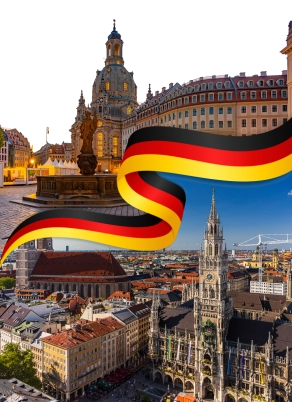
Germany has quietly become one of the most popular study destinations for international students, There are best universities in Germany for international students, with over 400,000 students from around the world. As the largest economy in Europe, the country is driven by industries such as automotive manufacturing, renewable energy, industrial machinery and advanced technology, forming the engineering and manufacturing backbone of the continent.
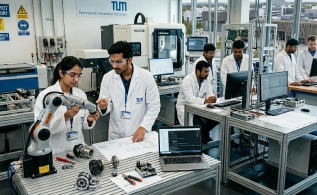
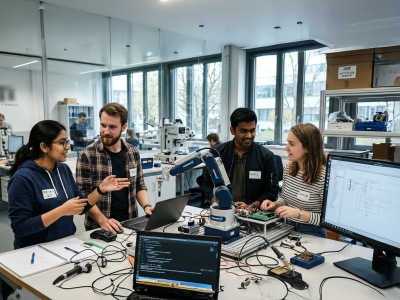
Private as well as public universities in Germany for international students operate within this strong industrial and research environment. Academic institutions collaborate closely with companies such as BMW, Siemens, Bosch and SAP, allowing students to engage in practical training, laboratories, internships and applied research during their studies.
Student life in Germany is well supported and organised. Public universities in Germany charge very low or no tuition fees and students benefit from semester transport tickets, healthcare coverage, organised student services and various student discounts. Alongside academics, Germany offers a diverse cultural environment with festivals, sports clubs and international communities.

Annual Tuition Fees (Public & Private)
Weekly Part-Time Work
Post-Study Job Search Visa
countries Access with a Schengen visa
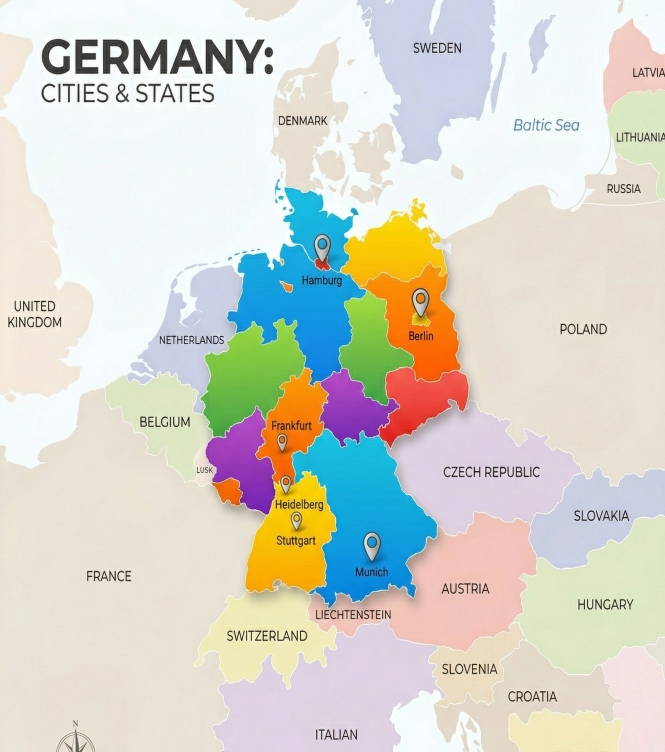

Capital
Berlin

Popular Cities
Berlin | Munich | Hamburg | Frankfurt | Stuttgart | Heidelberg

Travel Time from India
8–10 hours by Direct Flight

Currency
Euro ‘€’

Germany at a Glance
-
India and Germany share strong trade and education ties, with bilateral trade crossing €30 billion annually. The India - Germany Migration & Mobility Partnership (2023) supports students to study abroad in Germany and skilled professional exchange, while over 450 university collaborations and joint research initiatives promote cooperation in areas such as AI, sustainability and smart manufacturing.
-
Germany offers a student-friendly lifestyle with affordable public transport, student discounts, cultural festivals and strong social inclusiveness. English-taught programs are common in universities, but learning German enhances daily interactions and employability.
-
The higher education system is structured around Universitäten (research universities) and Fachhochschulen (applied science universities), combining academic theory with practical training. Programs often include internships, laboratory research and cooperative study models (Duale Studiengänge) developed with industry partners.
-
German degrees are highly respected worldwide, especially in engineering, sciences, renewable energy, and economics. Universities operate with advanced laboratories, research centres and international collaborations, supported by institutions such as the German Research Foundation (DFG) and European research programs like Horizon Europe.
-
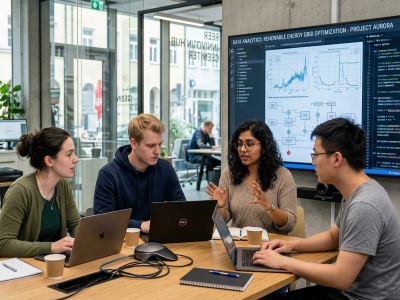
Germany maintains a strong focus on emerging technologies such as AI, robotics, green energy and quantum technologies, supported by strategic government funding. Germany’s National AI Strategy includes over €5 billion in investment (2020–2027) to strengthen research and innovation in artificial intelligence, robotics, renewable energy and other emerging technologies.
-
Universities such as TU Munich and RWTH Aachen collaborate with companies like Bosch, Siemens and SAP on applied AI projects in manufacturing, automotive systems, healthcare diagnostics and green technologies, particularly within major innovation hubs like Munich, Berlin and Stuttgart.
University Options in Germany
When planning to study abroad in Germany, students will mainly come across two types of universities: public and private institutions. Both offer quality education and globally recognised degrees, but the overall study experience can feel a little different depending on the type of university you choose. Some students prefer the large research-driven public universities in Germany, while others enjoy the smaller and more personalised environment offered by private institutions.
Public Universities
State-funded institutions offering more than 20,000 study programs across Bachelor’s, Master’s and research degrees.
Usually no tuition fees, with only a semester contribution of about €70–€430 for services like administration and transport passes.
Known for strong research, global rankings and large academic networks.
Admissions are more competitive, often based on academic grades and program requirements.
Degrees are state-recognised within Germany’s higher education system.
Private Universities
State-recognised private institutions that operate independently but follow German education quality standards.
Programs involve tuition fees (typically €6,000–€15,000 per year), often with scholarships or early-bird reductions.
Smaller class sizes (around 20–30 students) allow more personalised learning.
Admissions are more flexible, with interviews, internal tests or motivation screening instead of strict grade cut-offs.
Often maintain strong industry partnerships, offering company projects, guest lectures and career-focused programs.
Career & Employment Outlook
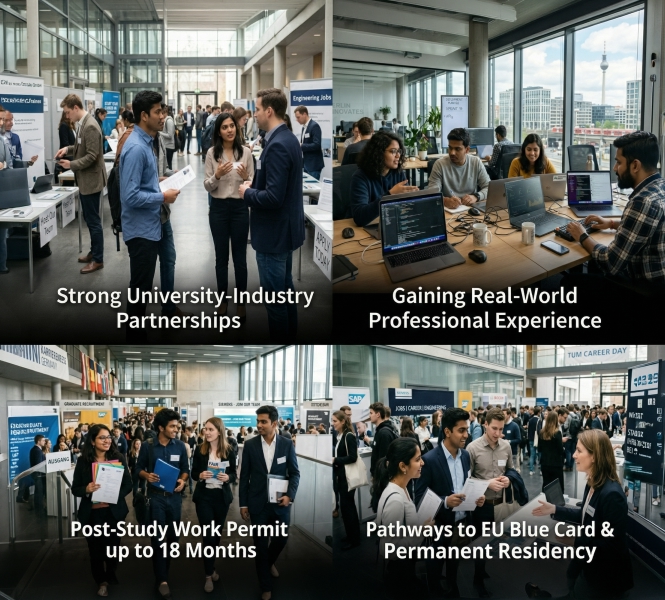
Germany continues to welcome skilled professionals and universities work closely with industry to prepare students for real careers. Through internships, industry projects and practical training, students gain valuable exposure to the professional environment even before graduation.
After completing their degree, graduate students can stay in Germany for up to 18 months to search for a job related to their field. Once employed, professionals can transition to the EU Blue Card, which allows long-term work opportunities and the flexibility to work across several European Union countries. Learning German at a B1/B2 level can further help graduates integrate into the workplace and daily life.
For those planning to build a long-term future, Germany also offers clear pathways to permanent residency. EU Blue Card holders may qualify after 33 months, or 21 months with stronger German language skills, while other graduates can apply after several years of stable employment and contributions. The system also supports family reunification, making it easier for professionals to settle and grow their careers in Germany.
Top 5 Employment Sectors (2025–2026)
Engineering & Manufacturing
Automotive, aerospace and mechanical engineering industries led by companies such as BMW, Mercedes-Benz and Siemens.
Information Technology
Artificial intelligence, data science, cybersecurity and enterprise software development.
Renewable Energy & Sustainability
Wind energy, solar power and hydrogen technologies.
Healthcare & Biotechnology
Pharmaceuticals, medical technology and biomedical research.
Finance &
Consulting
Banking, insurance, corporate consulting and financial analytics.
Average Salaries After Master’s Degrees in Germany
(2026 Estimates)
Top 10 Universities in Germany
(QS World University Rankings 2026)




Ready To Get Started?
Enhance your knowledge and grow professionally by learning new skills anytime, anywhere.
Start Learning Now Start Learning Now
© 2026 Edualliance All Rights Reserved | Designed & Developed by Trimitiy